










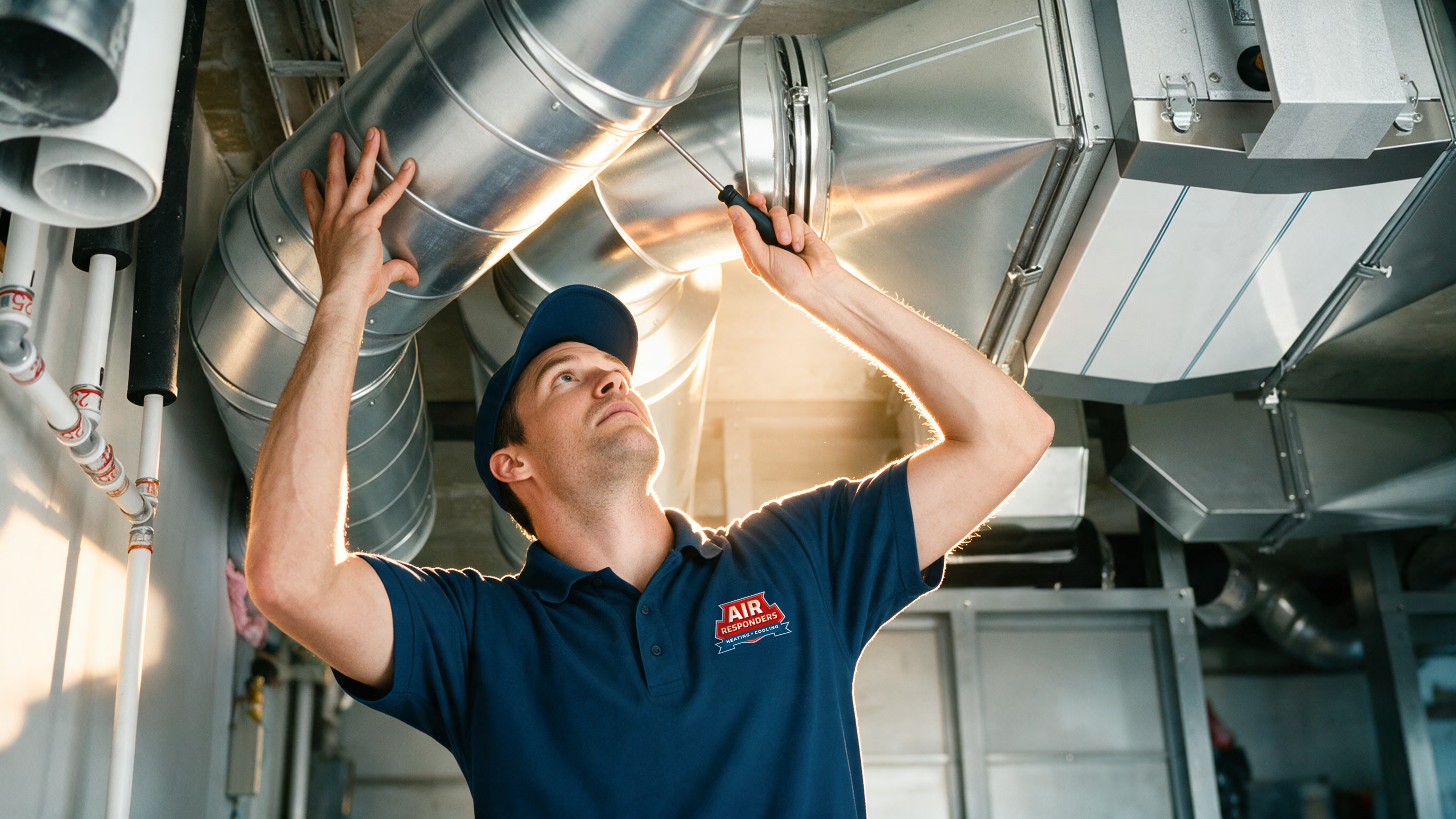







A real person answers the phone, and you get a text with your technician's photo and arrival window before he leaves. We evaluate the whole system rather than the first obvious fault, and document what we find with photos and video.

Three options every time, priced clearly, with financing available on repairs as well as replacements. Most work is completed the same or next day.

We re-measure airflow, refrigerant charge and temperature split after the repair, so you know the fix held and the rest of the system is running where it should.
Parts and labor covered in writing, your diagnostic fee applied to the repair, and a manager call afterward to confirm it was done right.
Air Responders serves 40 cities within 50 miles of Austin, including Round Rock, Cedar Park, Georgetown, Pflugerville, Kyle, Buda, San Marcos, and New Braunfels. Most heating and cooling repairs handled same or next day.


Ice on an air conditioner is almost always an airflow or refrigerant problem. Too little air across the evaporator coil — from a clogged filter, a collapsed duct or an undersized return — lets the coil drop below freezing. Low refrigerant from a leak does the same thing.
Switch the system to fan-only to thaw it before we arrive, and be aware that adding refrigerant without finding the leak only buys a few weeks. We locate the leak first.
If the system is over twelve years old and the repair is more than roughly a third of a replacement, replacement usually wins on total cost — particularly if it's the second repair in a season or the compressor is involved.
Below that threshold, repair is generally the right call. We show both prices side by side along with the efficiency difference, so you can decide on the numbers rather than on whichever answer we happen to profit more from.
Ten to fifteen years is realistic here, at the shorter end of the national range. An Austin air conditioner runs close to eight months a year and spends much of that at full tilt, so it simply accumulates more hours than the same unit would elsewhere.
Annual maintenance is what moves a system toward the top of that range. Clean coils, correct refrigerant charge and proper airflow are what keep a compressor alive; neglect on any of the three is what shortens its life.
Usually, yes. We hold same and next-day slots through the summer for no-cooling calls, and our trucks carry the parts that fail most often in Austin heat — capacitors, contactors, fan motors and float switches.
You'll get an arrival window plus your technician's photo and name by text, and you can track him in real time. In peak August weeks the schedule fills fast, so calling early in the day materially improves your odds of a same-day slot.
Our diagnostic is $77 and applies toward the repair if you go ahead. Beyond that it depends entirely on the fault: a capacitor or contactor is a modest fix, a blower motor or evaporator coil is significantly more, and a compressor is usually a replace-or-repair conversation.
Nobody can price an AC repair accurately over the phone, and anyone who quotes one is guessing. You'll see photos of the problem, three priced options and the total before we start.
The four usual causes are a failed capacitor stopping the outdoor unit, low refrigerant from a leak, a frozen evaporator coil, or a dirty condenser coil that can't reject heat into 100-degree air.
A frozen coil is the one to act on quickly: turn the system to fan-only for a few hours to thaw it before we arrive, or the ice will hide the underlying fault. Running a system with a frozen coil risks liquid refrigerant reaching the compressor, which turns a small repair into a large one.
Heating, cooling, or air quality — book online in under a minute or call and talk to a real person. Same or next-day service across the Austin area.