









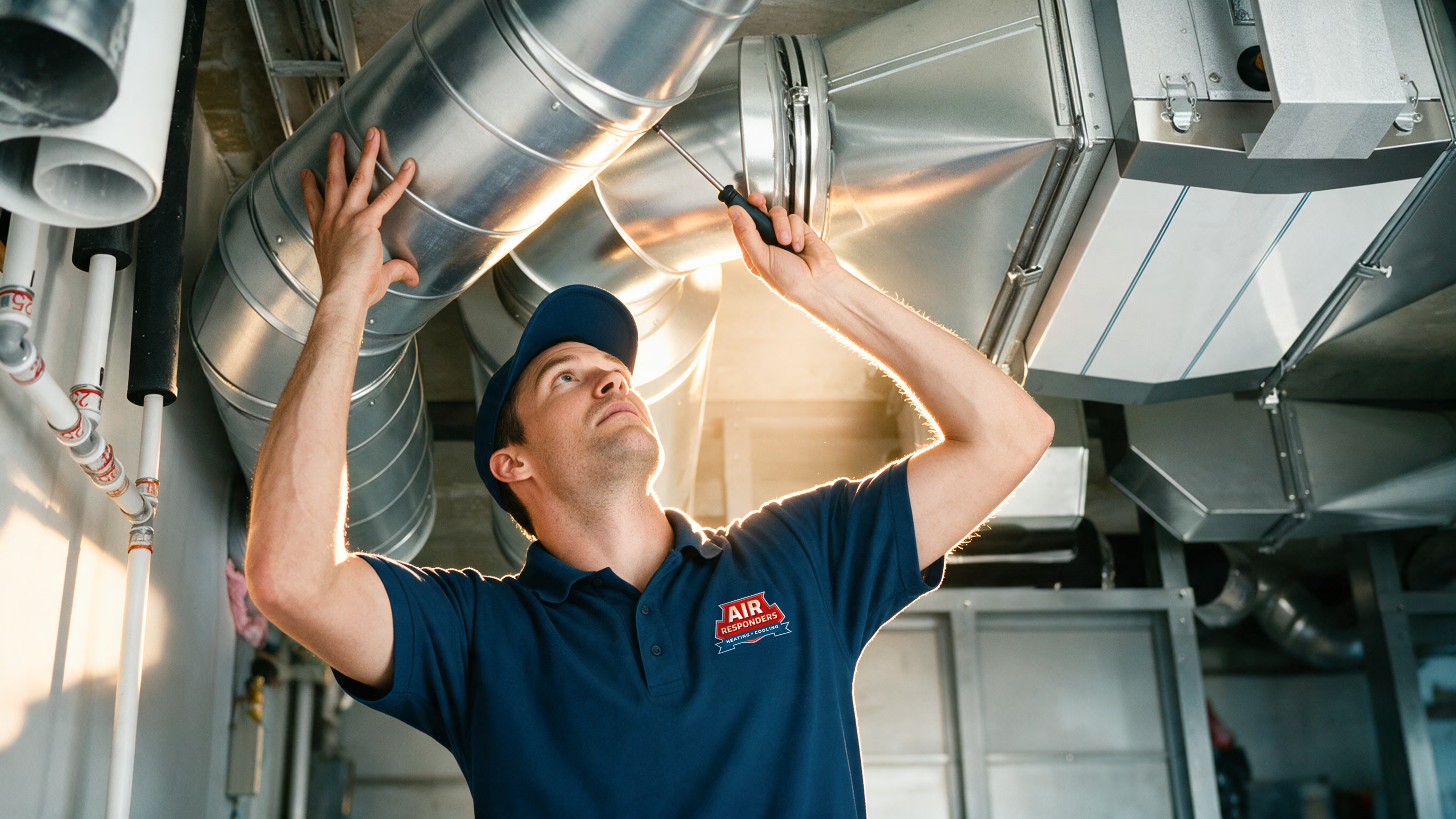



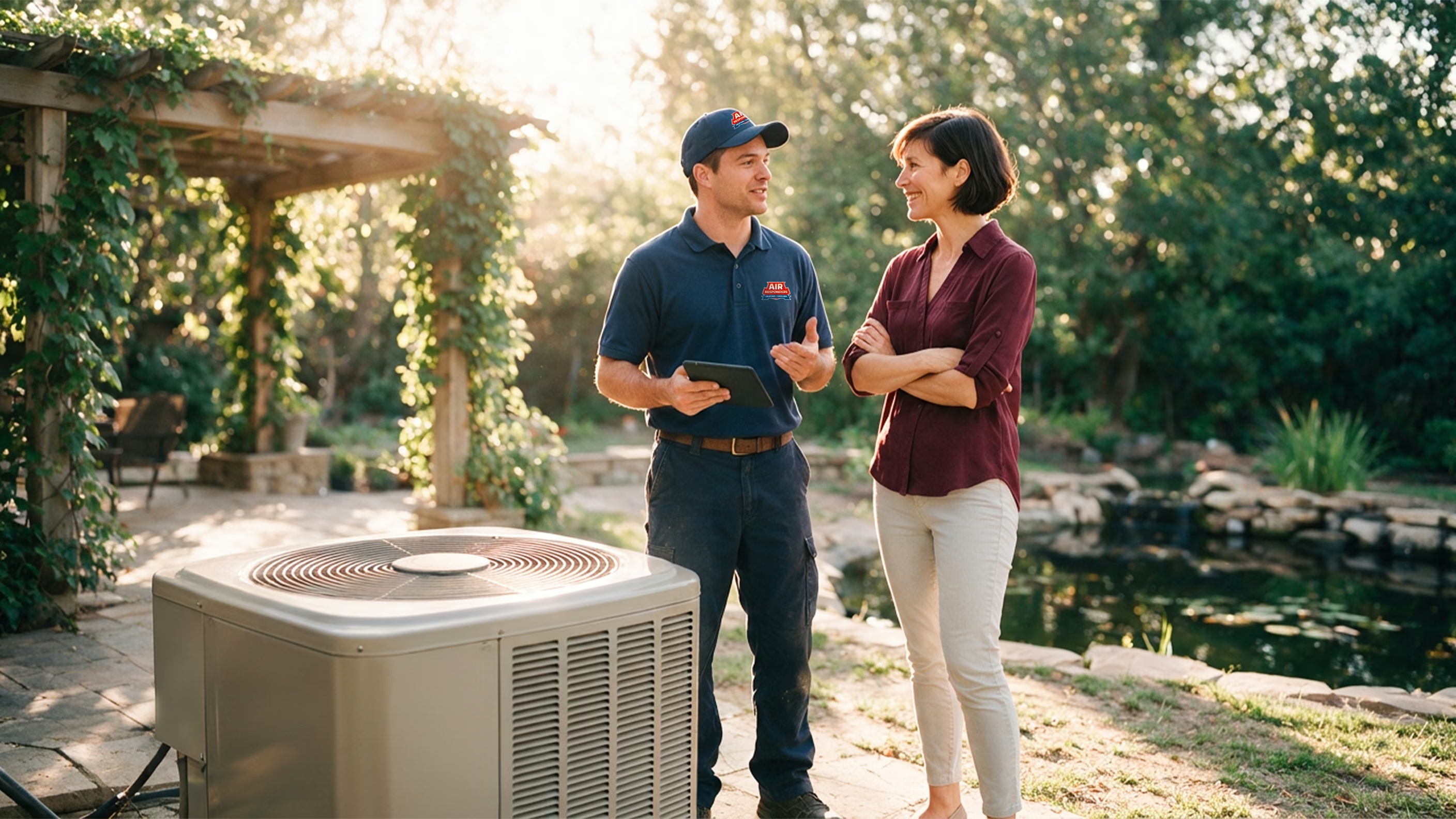



A real person answers the phone, and you get a text with your technician's photo and arrival window before he leaves. We evaluate the whole system rather than the first obvious fault, and document what we find with photos and video.

Three options every time, priced clearly, with financing available on repairs as well as replacements. Most work is completed the same or next day.

We re-measure airflow, gas pressure and temperature rise after the repair, so you know the fix held and the rest of the system is running where it should.
Parts and labor covered in writing, your diagnostic fee applied to the repair, and a manager call afterward to confirm it was done right.
Air Responders serves 40 cities within 50 miles of Austin, including Round Rock, Cedar Park, Georgetown, Pflugerville, Kyle, Buda, San Marcos, and New Braunfels. Most heating and cooling repairs handled same or next day.


Yes — gas furnaces, electric furnaces and heat strips, and heat pumps. That range matters in Austin, because a large share of homes here heat with something other than gas.
Heat pump faults often show up in only one mode, so we test heating and cooling operation together, along with the reversing valve, defrost cycle and refrigerant charge, rather than only the mode that brought us out. A reversing valve problem found in December is a lot cheaper than the same problem found in July.
Yes. A cracked heat exchanger can let combustion gases, including carbon monoxide, into the air your blower circulates through the house. It is the one heating fault we will not leave running.
If we find one, we shut the system down, show you the photographs, and walk you through repair and replacement options the same day. If you have a carbon monoxide alarm and it is currently sounding, leave the house and call 911 before you call us.
A useful rule of thumb: if the repair costs more than about a third of a replacement and the system is past twelve years old, replacement usually wins on total cost. But it isn't automatic — a fifteen-year-old furnace with a $250 ignitor problem is worth fixing.
We price both paths on the same page: repair cost, replacement cost, and what each does to your utility bill. That turns the decision into arithmetic rather than a sales pitch, and sometimes the honest answer is to repair it and get one more season.
In most cases, yes. We hold same or next-day slots for no-heat calls, and our technicians carry the parts that fail most often on Austin systems — ignitors, flame sensors, capacitors, contactors and sequencers.
Larger components such as blower motors and control boards occasionally take an extra day to source. Either way you get a booking window, your technician's photo and name by text before he leaves, and live tracking — so you're not giving up an entire afternoon to a four-hour window.
Our diagnostic is $77, and it applies toward the repair if you move forward. The repair itself depends on what failed: a flame sensor, ignitor or capacitor is a modest fix, while a blower motor, control board or heat exchanger is a much larger one.
You'll see the problem in photos, the price, and three options before anyone starts work. Financing is available on repairs as well as replacements, so a large unexpected repair doesn't have to be paid in one go.
Usually the burners aren't igniting while the blower keeps running. On a gas furnace that points to a failed ignitor, a dirty flame sensor, or a safety switch that has tripped for a reason worth finding. On a heat pump it's more often a reversing valve fault or a system stuck in defrost.
Any of those can be identified in one visit. The underlying cause matters more than the part, though — a flame sensor that fouls every winter is telling you something about combustion or airflow, so we inspect the whole system before quoting a fix.
Heating, cooling, or air quality — book online in under a minute or call and talk to a real person. Same or next-day service across the Austin area.